Third annual research retreat explores communication, collaboration in science
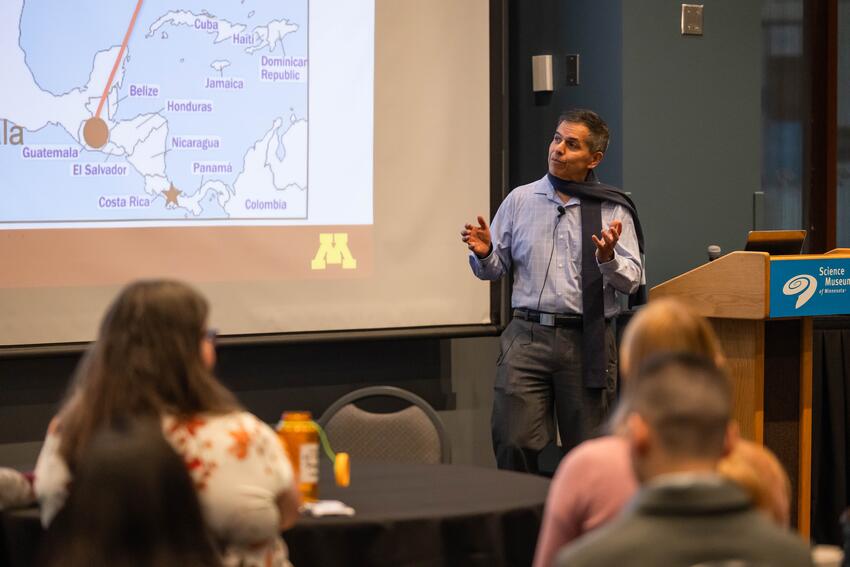
The School of Dentistry held its third annual Fall Research Retreat on Friday, October 24.
Hosted by the Office of the Associate Dean for Research and Discovery, the retreat brought together members of the research community, including faculty, lab staff and students to share advancements in research at the school.
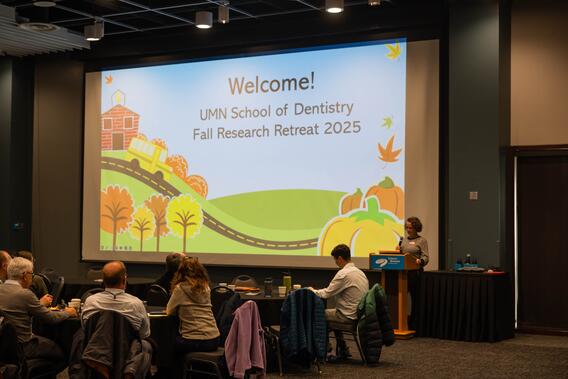
“Despite challenges, we have a lot to celebrate,” reflected Kristin Artinger, PhD, Associate Dean for Research and Discovery. She shared success stories from the past year, including researchers receiving grants for discovery, training and more.
The retreat included a series of flash talks from faculty and learners across programs. These short presentations gave faculty, residents, Oral Biology and Master of Science in Dental Hygiene students an opportunity to share the focus of their research, from dental hygiene to virology to development and biomaterials, identifying key themes and showcasing the depth and breadth of study throughout the school.
Headlining this year’s retreat was keynote speaker Edgar Arriaga, BSc, PhD, Northey Professor of Chemistry in the College of Science and Engineering. Arriaga’s research group “applies innovative analytical chemistry approaches to unravel the complexities of biological systems at the single cell and subcellular level,” explained Sarah Aitken, DDS/PhD candidate, introducing Arriaga. A mentor who has embraced professional service as a faculty member, Arriaga embraces the role of inclusive excellence and mental health care in academia.
Arriaga presented on “Using a SCARF to communicate in research environments,” citing David Rock’s method of status, certainty, autonomy, relatedness and fairness from NeuroLeadership Journal.
He began with a reflection on his own journey through academics and what it taught him about life and academia—including critical thinking, resourcefulness, confidence, innovation and teamwork, sharing that “how we do science is connected with who we are, our background experiences.”
He continued, exploring the importance of communication in an academic community.
“Positive communication is strategic—not just nice,” Arriaga emphasized. “Our work is not only about the science that we do, but the people we work with.”
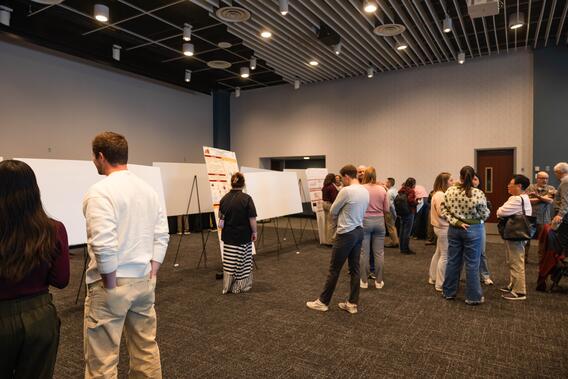
Over the lunch hour, attendees enjoyed a poster session from School of Dentistry trainees, students and post-doctoral fellows, as well as a tabling session featuring resources available to researchers. Featured resources included the Grants Management Unit, Health Sciences Libraries, health and safety at the school, the Oral Health Clinical Research Center and the Clinical and Translational Science Institute.
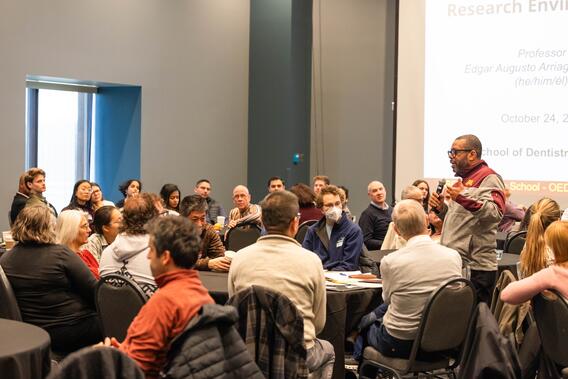
After lunch, participants engaged in breakout discussions on the topics of resiliency, collaboration, accessibility and inclusivity, work-life balance and developing new projects. These groups, facilitated by faculty or staff and student researchers, allowed attendees to come together and discuss a topic that interested them, seeking solutions to research challenges and connecting over shared values.
Throughout the day, researchers enjoyed time together thinking creatively and working collaboratively in the Minnesota Science Museum, finding new ways to support one another in the school’s mission to embrace discovery that impacts patient care.