Society of American Indian Dentists Conference encourages information sharing, connection for School of Dentistry community
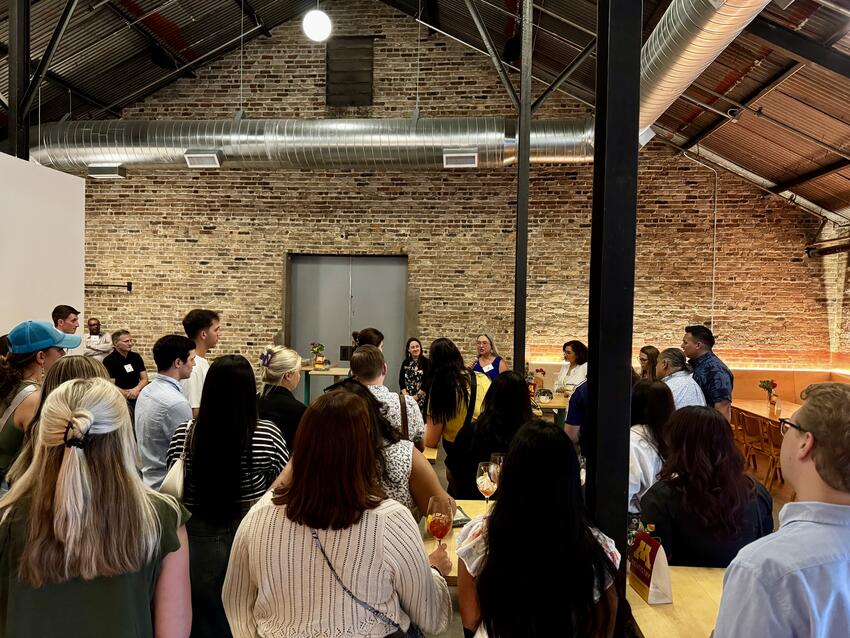
The School of Dentistry community shared insights, networked and invited prospective learners to campus as part of the Society of American Indian Dentists (SAID) Conference.
Held June 10-13 in Minneapolis, the conference centered on the theme “From the Land of 10,000 Lakes: Indigenous Strength and Dental Health.” The conference welcomed members of the society, prospective students, researchers and practitioners to share information and network.
On the evening before the conference began, Angie Hastings, DMD, clinical associate professor and director of the Division of Community Outreach and Engagement, and Susie Wold, MS, assistant director of admissions, worked with SAID board members to coordinate a dinner for predental students, students in the IHS/Tribal Elective Course, alumni, faculty and community members. “It was a wonderful evening full of networking with the hope that prospective and current students find mentors, explore job opportunities and build relationships to strengthen the dental community,” Hastings reflected.
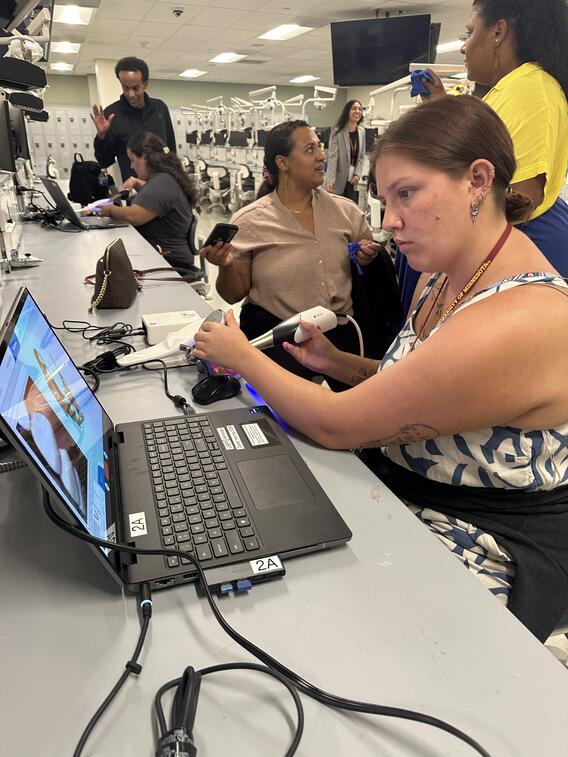
During the conference, predental students had the opportunity to spend time at the School of Dentistry, enjoying a tour, a panel with current students and hands-on activities in the preclinical space. “It was a great opportunity to highlight the school and allow students from across the country to see what Minnesota has to offer,” Wold shared. She appreciated the chance to reconnect with alumni and board members.
That connection is key to Wold’s work—and to the school’s, she explained. “Building authentic relationships and connecting prospective students is integral to recruiting the next generation of oral health professionals to serve Minnesota,” she said. “We are strengthening networks so that in the years to come, we can have more Indigenous dental students and providers working at IHS and Tribal clinics—often in rural areas.”
In addition to coordinating the networking dinner, Hastings shared a presentation on teledentistry. “My hope is that I inspired dental providers, current and prospective students to integrate alternative models of care delivery in their practices to improve population health,” she explained. “Not all individuals have the same access to dental care, and with an aging workforce, it is our duty to find creative solutions to ensure communities can receive preventative and emergent dental care when needed.”
Karl Self, DDS, MBA, associate professor of dental therapy, shared information about the School of Dentistry’s dental therapy program, curriculum and impact. “I wanted attendees to understand the facts about dental therapy and to recognize the ways their peers in states like Alaska and Minnesota are increasing their ability to serve their communities,” he explained.
Self "thoroughly enjoyed” his presentation and considered the conference overall “incredibly inspiring.”
As he returned from the conference, Self hoped to “bring back a renewed focus on how we can partner with and support tribal and Indian Health Services clinics,” he said. “It reminds me that we can improve our efforts to enhance our students’ education on cultural humility and inclusivity, improve our recruitment of individuals from Native communities who will return there to practice, and help inspire our current students to consider the path of practicing in these service areas.”
The providers, faculty, researchers, students and prospective students who attended the conference will take that passion and focus back to their work—and use it to serve Minnesota and beyond.