Resident wins first place at pediatric dentistry poster competition
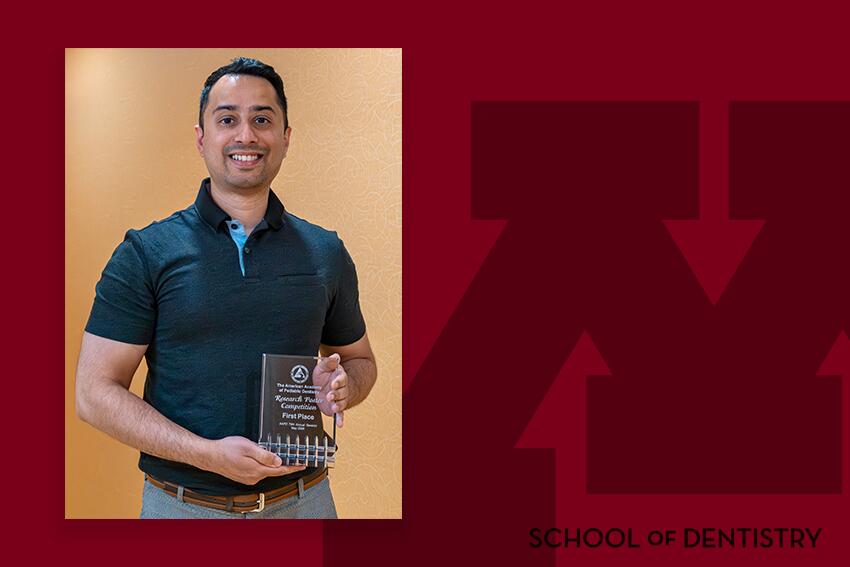
Presenting research that has been five years in the making, Kaushik Mukherjee, DDS ’22, PhD, Pediatric Dentistry ’26, recently won first place in a poster competition that included more than 200 entries from across the country. His poster, "Oxymetazoline as a Pulpotomy Medicament: Effects on MTA Structure-Function," earned recognition at the American Academy of Pediatric Dentistry in Las Vegas, Nevada. The 12,000-member nonprofit organization, founded in 1947, is the recognized authority on children’s oral health in the United States.
“The sheer size of the meeting, along with the number and enthusiasm of my fellow residents, was incredibly inspiring,” Mukherjee said. “I learned a great deal about how programs across the country are approaching clinical, basic science and public health research.”
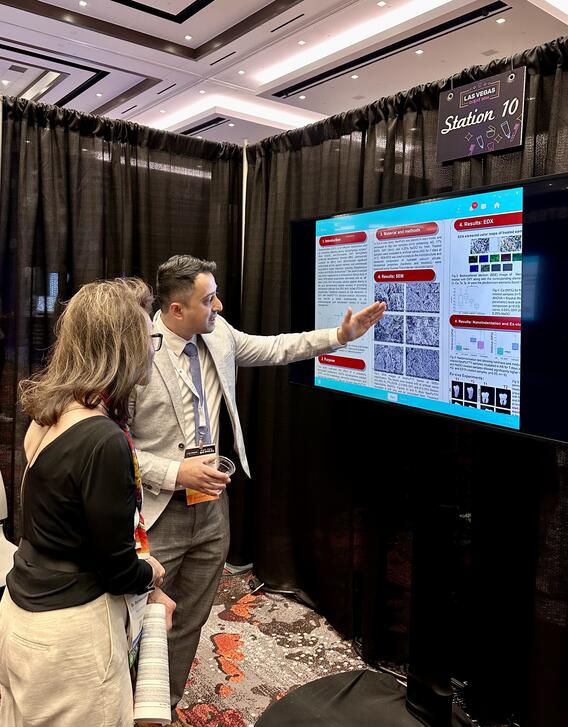
His research on his poster topic began in 2021, when he was a fourth-year DDS student working with Robert S. Jones, DDS, PhD, professor of pediatric dentistry. “Dr. Jones originally developed this idea, and he was instrumental in motivating me to expand and build upon the project during residency,” Mukherjee said.
He explained the project like this: “Oxymetazoline, which is commonly known by the brand name Afrin, is a hemostatic medication routinely used in ENT to control nasal bleeding. Our research investigated the use of oxymetazoline in deep dental cavities that extend into the dental pulp, which is the nerve of the tooth. Its dual benefits as a hemostatic and antimicrobial agent could help improve the clinical outcomes of pulp treatments in children. My study was a logical extension of these findings and sought to determine whether the use of oxymetazoline interfered with the dental materials used to restore these teeth after treatment.
“Our proof-of-concept study demonstrated that oxymetazoline provides dual benefits as both a hemostatic and antimicrobial agent without adversely affecting the structural or mechanical properties of commonly used dental materials. This raises the possibility of improved clinical outcomes and greater treatment success.”
With such a promising start to the research, Mukherjee has a clear plan for the future: “The next step will be clinical studies that bridge the gap between basic science and translational research by evaluating the long-term outcomes of teeth treated with oxymetazoline. These studies will help determine whether the promising laboratory findings translate into improved clinical success for pediatric patients.”

As his work moves forward, he’s grateful for the culture of teamwork he’s found at the School of Dentistry. “My time here has been shaped by exceptional mentors, supportive co-residents, incredible staff and opportunities that challenged me both clinically and academically. The culture of collaboration within our department encouraged me to pursue research while continuing to grow as a clinician, and I am incredibly grateful for those experiences.” He singled out two mentors in particular: “I have to give tremendous credit to Dr. Rob Jones for providing me with opportunities to incorporate research into an already busy residency curriculum,” he said. He also thanked Pediatric Residency Program Director Jeff Karp, DMD, MS. “He has accommodated and supported the individual research interests of residents, helping tailor opportunities to their goals.”