Renewal of T32 grant extends Institute for Molecular Virology fellowship training
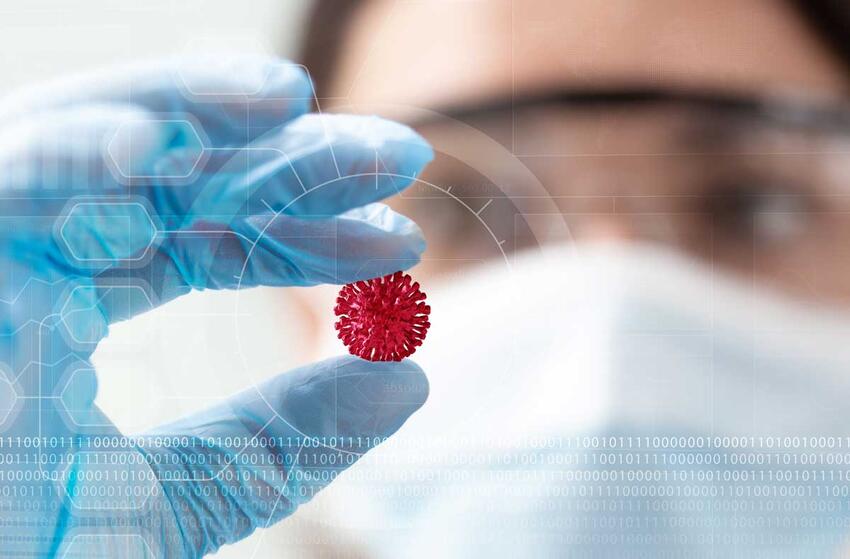
The Institute for Molecular Virology received a competitive renewal of its long-standing National Institutes of Health T32 grant, providing support for predoctoral fellowships through 2030.
Established in 2003, the Institute for Molecular Virology seeks to improve the health of Minnesota through education, outreach and basic, clinical and translational research in virology. The institute began training predoctoral students through fellowships in 2010, when the T32 program was first awarded.
“The goal of the IMV’s training program is to train young scientists who will become the next generation of virologists, which is essential for our nation’s capacity to respond to existing, emerging and future viral diseases,” explained Louis Mansky, PhD, professor of basic sciences and director of the institute. Research opportunities include viral epidemiology, disease tracking, viral pathogenesis, viral vaccines, antiviral drugs, viral vectors, gene therapy and molecular and structural virology. Fellows have the opportunity to pursue graduate virology courses and engage in various career development activities including numerous opportunities to present and get collegial input on their research.
The successes of the institute are perhaps best reflected in its trainees—both former and current.
José Maldonado-Ortiz, DDS ’18, PhD ’18, adjunct assistant professor of basic sciences and assistant research investigator for HealthPartners Institute, was part of the first group of awarded IMV fellows. He was then awarded an individual NIH F30 fellowship from NIDCR. He pursued training through the IMV’s T32 training program “because of the IMV’s reputation as a hub for rigorous virology research and interdisciplinary collaborations,” he explained. After completing a dual DDS and PhD at the School of Dentistry, Maldonado-Ortiz hoped to better understand how viruses interact with oral disease. “The IMV provided a structured environment that complemented my dental and PhD training, preparing me to ask clinically relevant questions with strong scientific foundations.”
Maldonado-Ortiz found the fellowship experience “both challenging and inspiring,” and looks back fondly on “the culture of open scientific exchange.” That culture, where Maldonado-Ortiz could share his own ideas and engage with those of others, informs how he approaches research today.
“As I now study viral and immune-mediated salivary gland dysfunction and lead a translational research program, I still draw on the foundation of virology and critical thinking that I developed in the IMV,” he reflected. “ The habits of engaging with diverse research, questioning assumptions, and valuing interdisciplinary collaboration make me a better scientist. As an educator, the IMV taught me the importance of creating a supportive, intellectually vibrant environment for trainees, while also providing the freedom for them to develop their own ideas and ways of thinking. That balance is something I strive to replicate for students and mentees in my own lab.”
Gloria Baxter, PhD candidate in molecular, cellular, developmental biology and genetics and a current IMV fellow, was drawn to the fellowship program due to its emphasis on scientific professional development. Through experiences in the IMV Education and Career Development Series, weekly events and the collaborative environment, Baxter has gained confidence, experience and feedback that continue to support her student journey.
“The IMV has helped me build my network of colleagues and collaborators,” she reflected. “This will help me significantly when it comes to searching for postdoctoral opportunities and faculty positions. It also reminds me of the importance of giving back to students by sharing my career path, with the hope that it will help others with their career exploration.”
As the program moves forward, training future scientists will remain at the forefront—and Mansky will continue to celebrate the impact the program has had on the School of Dentistry, the University community and beyond.
“Many success stories provide clear evidence for the value the IMV provides to the School of Dentistry and the Health Sciences,” he explained. “Engaging like-minded students and faculty interested in virus biology and disease has fostered interactions and collaborations that have leveraged the successful awarding of our T32 program and the subsequent success of three competitive renewals along with establishing collaborative interactions among faculty leading to numerous new NIH research grants that include new partnerships with both the Masonic Cancer Center and the Hormel Institute. The IMV training program is the School of Dentistry’s only NIH-supported T32 program.”