"Music and mindfulness" connects School of Dentistry, Music in wellbeing event
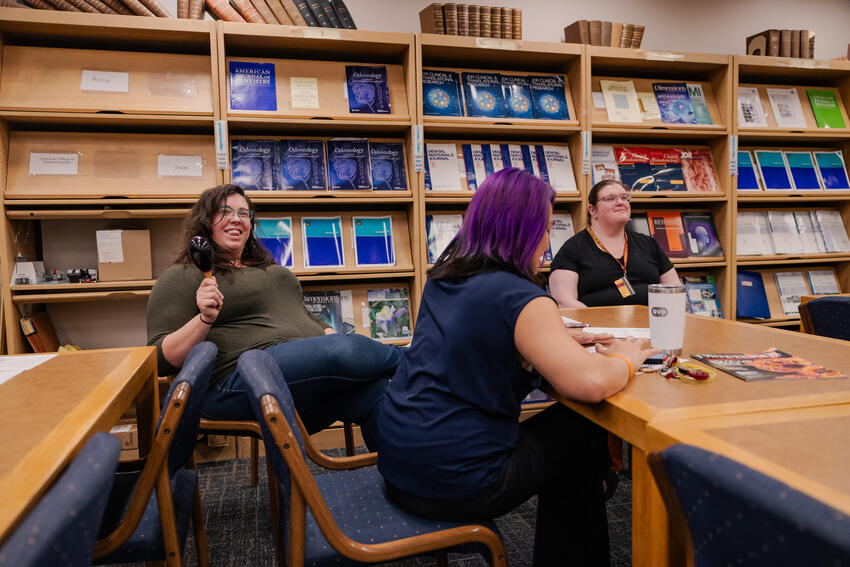
Members of the School of Dentistry participated in two collaborative events with the School of Music to promote wellbeing and celebrate the connections between art and science.
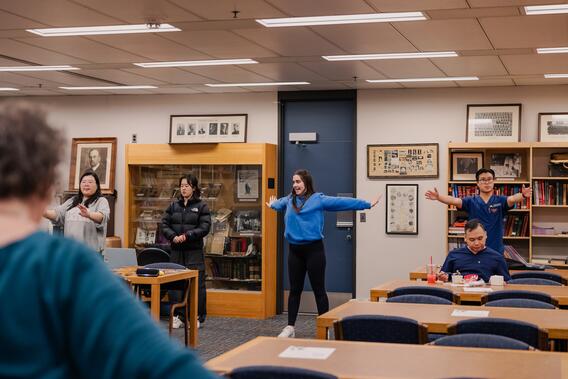
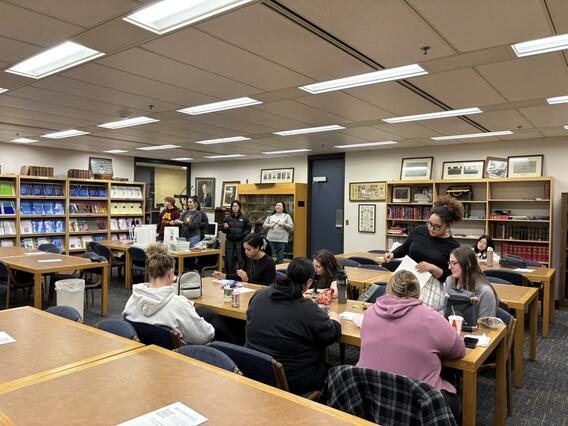
Music and Mindfulness, an hour-long event held twice over the lunch hour in April, engaged students, faculty and staff in stretching, mindfulness exercises and simple percussion. Students from the School of Music led the group in songs, movements and social connection.
“We hoped this would be a fun and engaging stress relief opportunity for the community, and appreciated that it would be led by those who are trained in this kind of activity,” explained Shannon Gilligan Wehr, assistant director of student and resident affairs. “Having the opportunity to step away from the stressors of clinic, class or other responsibilities to decompress with others can have a huge impact on how students, faculty and staff are able to approach the rest of their day.”
Tristan Spillane, a graduating senior Carlson School of Management with a minor in ensemble music, knows the value of incorporating art in education. He joined the ensemble music minor when it was created last year, after having participated in the University Singers Maroon since his freshman year. “The minor has allowed me to continue pursuing my passion while focusing on my business studies, creating a well-rounded educational experience that balances my interests’ analytical and creative aspects.”
He and his classmates in a course called “The Engaged Musician” created the event as part of their curriculum, seeking “an easy and interactive way to get health care students to decompress.”
“The program evolved from discussions about the therapeutic benefits of music and how we could create an accessible experience that requires no prior musical training, but still provides meaningful engagement and stress relief,” he said. He hoped to share with “people who do not consider themselves musicians…how easy it is to create music,” and to introduce them to music as “a powerful tool for self-care that’s always available to them, regardless of their musical background or training.”
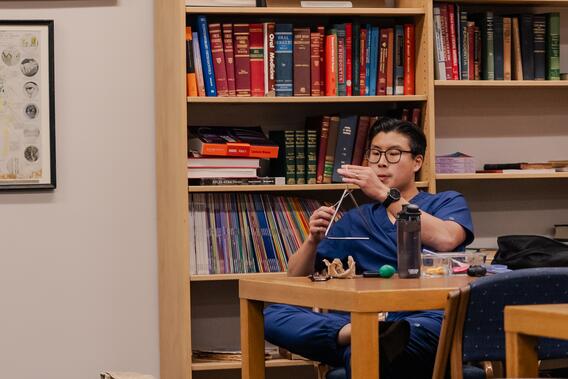
During the session, participants were offered a variety of instruments—including tambourines, egg shakers, bucket drums and a triangle. School of Music students led each instrument section in simple beats and patterns, working together to create a symphony alongside musical pieces from Beethoven to Jason Mraz to Star Wars’s Imperial March.
Gilligan Wehr appreciated the open opportunity the event gave participants to engage in a way that felt best to them in a moment. “If someone could benefit from banging on a drum, they were given that option,” she explained. “If maracas or egg shakers felt more their style, then they could choose those. Coloring sheets and the ability to use the table were also ways that participants could engage without actively playing an instrument.”
Josiah Wang, DDS ’25, attended the event “because it seemed like a casual and fun way to relax and try something new,” and out of a desire for interprofessional collaboration. He enjoyed the event, where he played the triangle. “It was nice to focus on something else for a bit, and have some fun with classmates and faculty,” he said. “A change of pace can be very good for relaxing, reinvigorating me to tackle whatever I was focused on before.”
The experience reminded Josiah of the importance of art in dentistry. “Music is a tremendous mental tool that helps me to focus better and deliver better dental care, and also useful as a tool to distract and relax patients receiving dental care,” he said.
Spillane and his fellow musicians hope the experience reinforces the connection between health care and the arts. “Both fields require creativity, problem solving and attention to detail,” he said. “They also serve fundamental human needs. There’s growing scientific evidence about music’s therapeutic effects on stress reduction, pain management and cognitive function, creating a fascinating intersection between these seemingly different worlds. This connection is precisely why programs like ours can be so beneficial for health professional students who regularly operate in high-stress environments.”
Julia Heinen, a clarinet lecturer who leads the course, hopes this activity gave the School of Dentistry community a glimpse into the value of music in everyday life.
“The School of Music is committed to fostering student learning, development and success through community-based learning, giving students lifelong practical skills while developing a deeper understanding of how music serves our community,” she said. “Activities like these foster a deeper sense of civic responsibility, while contributing to the wellbeing and advancement of the community. Music is the bond which connects all communities and unites us as people.”