Huang receives grant for global AI-empowered teledentistry
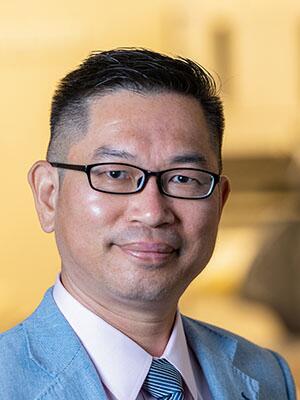
Boyen Huang, DDS, MHA, PhD, professor of dental public health and Assistant Dean for Faculty Development, has received a $5,000 grant for a globe-spanning effort to improve the quality of dental diagnosis through AI-empowered teledentistry. The grant was awarded by the University’s Center for Global Health and Social Responsibility (CGHSR), which invests in interdisciplinary, community-engaged work led by faculty and staff that strengthens global partnerships, advances innovative approaches to learning and generates knowledge with real-world impact.
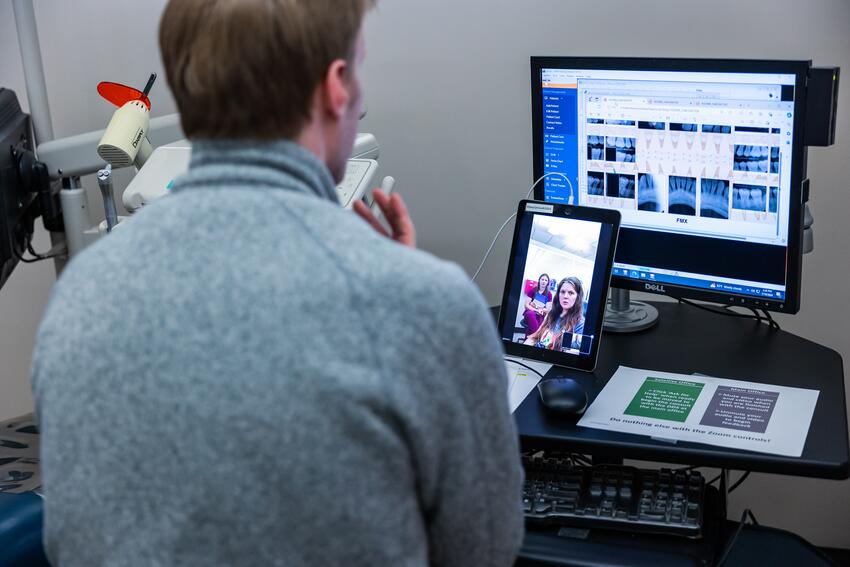
Huang is the principal investigator for the project, which is titled "Development and Evaluation of an AI-Empowered Teledentistry Diagnostic Tool in Minnesota, Taiwan and Thailand.” His co-PI is the University’s Yao-Yi Chiang. “The problem we’re working to solve is to increase the accuracy of diagnoses within the growing field of teledentistry,” Huang explained. His team used clinical photos from all three countries, including ones gathered from attendees at the Minnesota State Fair, to train the AI to spot areas of potential decay or trauma and to offer reminders highlighting those areas for dental professionals.
Addressing a common concern among health care professionals when AI is involved, Huang noted, “This project is not at all intended to be a replacement of dentists, but a way to help them more quickly identify key areas of concern and be aware of them. In all cases, the final patient diagnosis is made by dental professionals.” The training for the AI was completed with assistance from Angela Hastings, DMD, who is a clinical associate professor and the director of the Division of Community Outreach and Engagement for the School of Dentistry. “She practices teledentistry in Minnesota and elsewhere,” Huang said. “She developed possible diagnoses tooth by tooth, based on the collected photographs.”
With global collaboration being such a key part of the CGHSR grant’s mission, Huang and his team used some of the funding for in-person meetings of the teams from Minnesota, Taiwan and Thailand. “We were able to meet at Khon Kaen University in Thailand, where I was invited as a visiting professor to do presentations, meet with faculty, and provide research ideas and guidelines,” Huang said. “It was so important for the three team leaders to meet in person to discuss research, trending topics and calibration efforts.”
The grant funding helped cover travel costs for the Taiwanese research leader Wen-Chen Wang, from Kaohsiung Medical University, to visit Thailand for research calibration and the sharing of clinical research experiences. A portion of the funding will also be used to support the incentives for research participants in Minnesota, Taiwan, and Thailand.
For his part, Huang is hoping that the opportunities made possible through this grant will even further support the CGHSR’s goals. “When we were all able to meet together, so many good ideas for future work together began to emerge,” he said. “Without these opportunities to bring people together, we don’t work as efficiently.
“I hope we can expand the collaboration so it’s not just me at the center, but one in which other partners are interacting with each other for sustainable ways they can collaborate on their own, he said. “With that mission of global engagement, I hope that the University can be a hub for even more projects like this in the future.”