How a whole-health approach to dentistry saved one patient's life
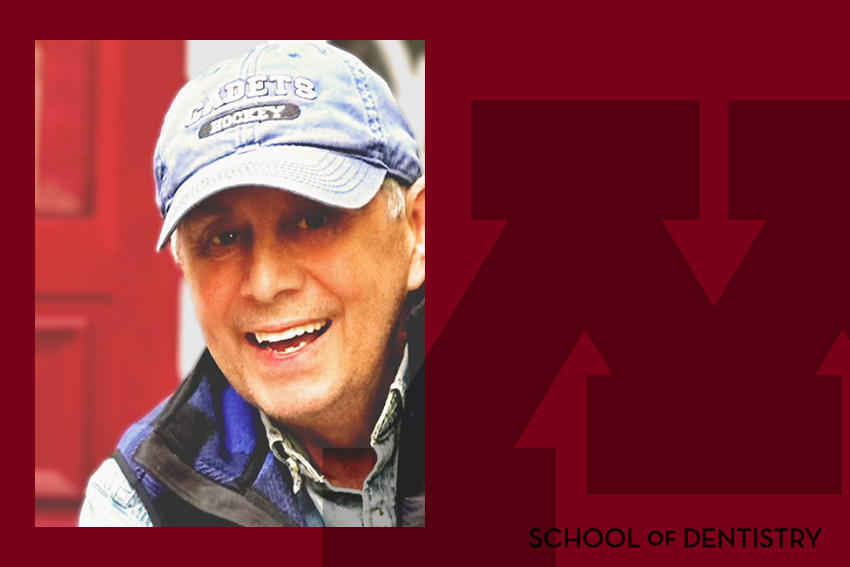
For Howard Quinlan, a visit to the School of Dentistry did more than keep his teeth clean: it saved his life.
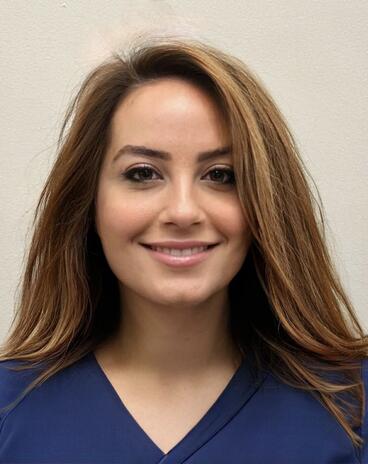
The visit started out like any other. Ellie Fekrazad, DDS ’25, started her typical assessment on Quinlan.
Ellie is in the Blue Group in Comprehensive Care Clinics, overseen by Carmen Real, DDS, clinical associate professor. Faculty throughout the clinics emphasize the importance of holistic patient care, but this is especially important to Real.
“Every time my students see a patient, I want them to see that patient as a person—not as a procedure, as a set of teeth, as a skills assessment or requirement, but an individual,” she explained. “We are treating the whole person who’s in our chair, so we need to understand the whole person.”
Because of this, Real emphasizes the importance of collecting a full patient history and recording patient vitals, including blood pressure and a head and neck examination at every appointment.
As a physician herself—having attended medical school before pursuing dental school—Ellie takes this responsibility seriously and is glad to follow Real’s guidance.
“Dr. Real is big on medical history, blood pressure, medication list, all the other information we can provide, and I really appreciate that,” Ellie explained. “Dentists can get tunnel vision toward teeth and the mouth, but our overall medical history can influence our teeth, just like anything happening in the mouth can affect the body. Our mouths are connected to our whole body, of course!”
Ellie performed her examination on Quinlan and found a lump in his neck. She followed protocol for documenting it and consulting with the patient, before also bringing it up to Real as part of her final checks. Real agreed that the lump may be suspicious, and encouraged Quinlan to follow up with his medical doctors.
On their advice, Quinlan connected with his Ear, Nose, and Throat doctor, who biopsied the lump and found it positive for papillary cancer—the same cancer that one of his sisters had previously endured. Quinlan quickly underwent surgery, where his thyroid was removed, revealing 18 cancerous nodes. After the procedure and subsequent radiation, Quinlan is cancer free.
Quinlan credits the School of Dentistry as saving his life, having found this lump and set him on the path to care.
“If it wasn’t for Ellie performing her exam, I’m sure it would have gone unnoticed for a long time,” he said. “I think it’s so beneficial that these students are well-informed and take the time to look out for overall health.”
Ellie and Real were overjoyed to discover that they had been part of such a successful medical experience.
“I broke into tears,” recalled Ellie, upon hearing Quinlan’s story. “It was the most rewarding experience of my life. I’ve spent so much of my life in school, and in that moment, it felt like all my efforts paid off.”
Real agrees. “We see so many patients every day, and you can never be sure what kind of an impact your care has on people’s lives,” she said. “When Quinlan came back to us, it really showed me the ways we are impacting people’s lives. It reinforced that we can make a difference, improve quality of life and sometimes even save someone’s life.”
Quinlan is endlessly grateful to Fekrazad and the school, for taking the time to treat him with excellent care and for their role in forming the next generation of oral health providers.
“Having these teaching institutions in our community is vital to our overall culture and society,” he reflected. “The professional schools do their part to turn out wonderful practitioners, and the University feels like part of our family, as well. My four children and my wife certainly agree and give their thanks to the University and the school for helping find this lump that had an unassuming existence for a long time, starting me on a journey I never anticipated, and one I’m grateful for.”