Champion of accessibility: Deaf dentist joins School of Dentistry
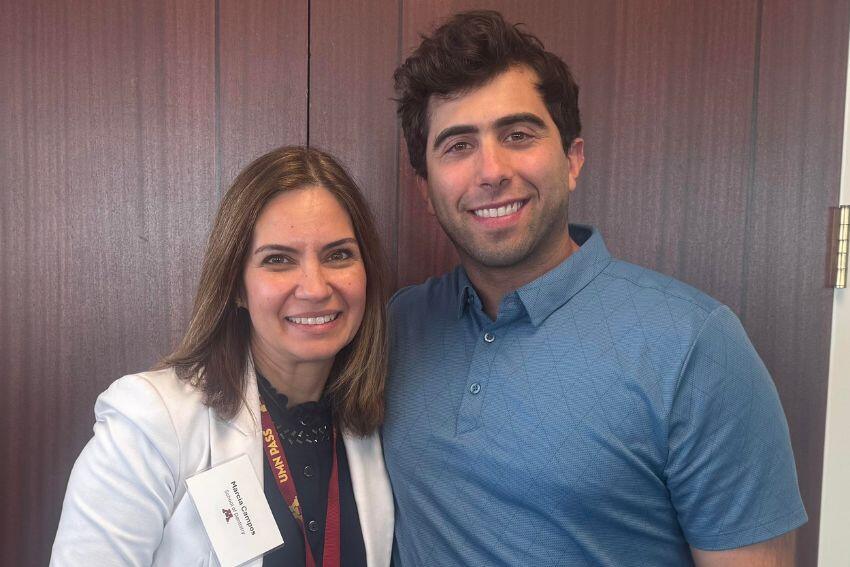
There are many new staff members on campus this semester, ready to contribute to the research, education and care happening in our community. One notable addition to faculty and staff is the barrier-breaking Michael Korleski, DDS, clinical assistant professor at the Special Healthcare Needs Clinic, who comes to the School of Dentistry from the West Coast.
Korleski, who was born deaf, said that his journey to becoming a dentist was purpose-driven. “I have firsthand perspective on the health disparities that exist for patients with disabilities, as my own experiences showed me the profound communication barriers that can challenge even fundamental healthcare visits,” he said. “I didn't just want to be a dentist; I wanted to be a healthcare provider and professor who could create an inclusive and accessible environment for everyone, especially those who are often overlooked. My work at the Special Healthcare Needs Dental Clinic is the culmination of my life's passion.”
The clinic is the ideal home for trailblazing new approaches to inclusive care, and Korleski points to its widespread acknowledgment as a respected leader in the field. “It’s a national model for delivering leading-edge, compassionate patient care,” he said. And beyond the clinic, he said that the University “provides fertile ground for my commitment to educating future dental leaders and for pioneering research that can redefine our field.”
It’s fair to say that you can expect innovative approaches during his time at the University. “A significant part of what I do is strategize non-invasive, behavioral techniques based on the biopsychosocial model,” he explained. “This allows me to build a highly customized approach for each patient, ensuring we can address their unique needs, build profound trust, and safely establish our clinic as their new dental home. It's incredibly rewarding work that focuses on the whole person, not just their oral health.”
The oral health disparities faced by the Deaf and Hard of Hearing community are well-documented, he said, and he hopes to help fill gaps in the need for care. Korleski cited his four-year retrospective study, published in The Journal of Dental Education, which illuminated a significant correlation between a dentist's educational background and their preparedness to provide care to this population. That research highlighted a foundational gap in traditional dental training, which he hopes to address with his work.
In a full-circle professional moment, Korleski has found a familiar face among all the new ones on campus—Marcia Campos, DDS, MS, PhD, new Associate Dean for Academic Affairs, who first met him at the University of Michigan when Korleski was a dental student there. “She was a mentor who supported me then, and it's an honor to be her colleague now,” he said.
Campos sees a bright future ahead for her mentee: “I believe Dr. Korleski will positively impact patients with disabilities by fostering an inclusive and empathetic environment in our Special Healthcare Needs Clinic. He can also teach our students and dental community that quality care should be accessible to everyone and inspire confidence through shared understanding of diverse needs."