AADOCR Research Exchange celebrates the future of oral health research
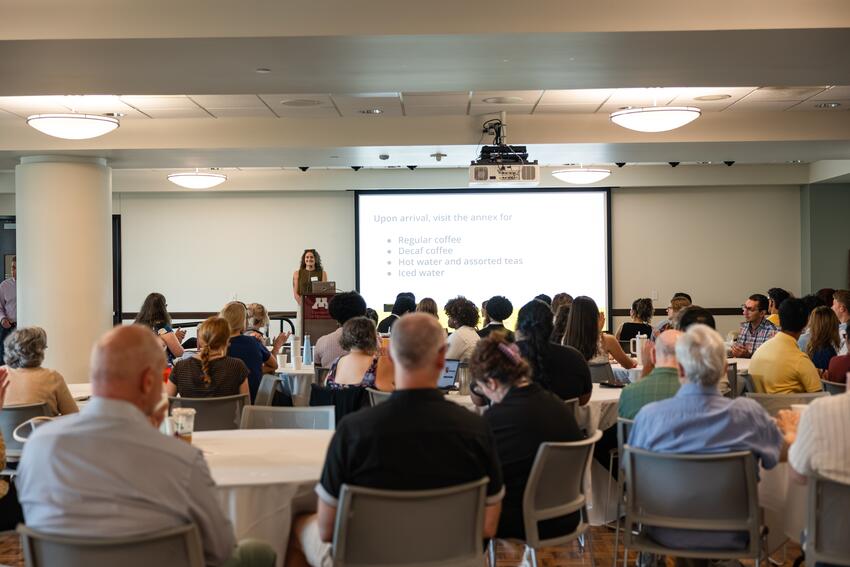
The School of Dentistry hosted the AADOCR Minnesota Section Research Exchange and Student Summer Research Symposium on Wednesday, July 29.
Learners and faculty from the school gathered alongside community members, industry partners and research experts to share insights and celebrate the next generation in scientific discovery.
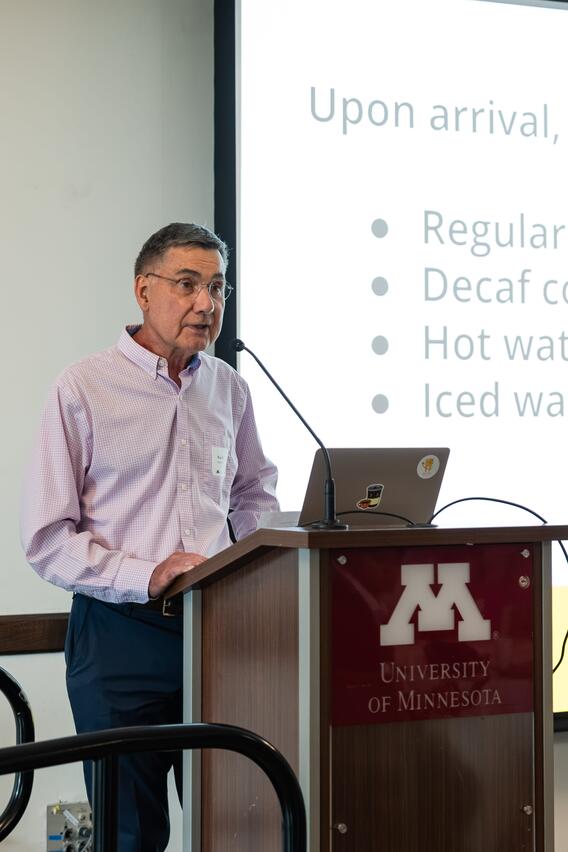
Brad Rindal, DDS, Senior Research Investigator and Associate Dental Director for Research and treasurer of the Minnesota section of the AADOCR, welcomed attendees to the event on behalf of the group.
“One of the things I especially appreciate about this meeting is that it brings together people at many different stages in their careers,” he reflected. “Looking around the room, we have undergraduate students, pre-doctoral students, dental students, graduate students, faculty and research staff. Your curiosity, enthusiasm, and willingness to engage in research are what drive the future of oral health sciences.”
Sarah Aitken, DDS/PhD candidate at the School of Dentistry, shared Rindal’s excitement and expressed gratitude for the AADOCR. “We wouldn’t be able to do what we do without the support of the Minnesota chapter and many of the people in this room,” she said.
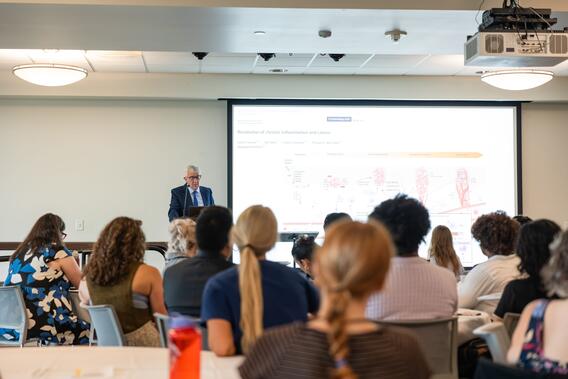
Alpdoğan Kantarci, DDS, PhD, CAGS, professor of periodontics and Chair of the Department of Developmental and Surgical Sciences, presented his research on novel therapeutic strategies in oral cancer targeting inflammation. “Oral cancer is a major disease that has haunted us for years, and will continue to do so,” he explained. He detailed the similarities between oral cancer and other cancers, such as lung cancer, and what those cancers can teach us about oral cancer, treatment and chronic inflammation.
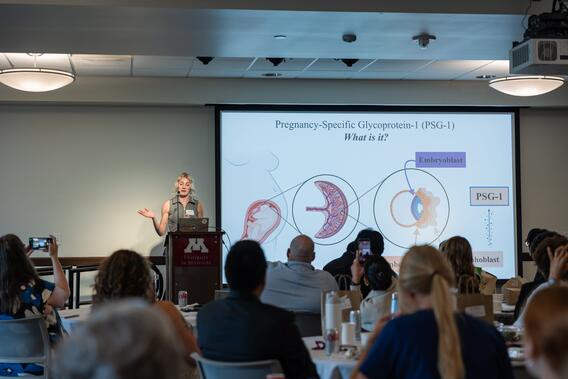
Attendees then heard from members of this summer’s Minnesota Craniofacial and Oral Health Research Experience (MN CORE) cohort. Undergraduate students presented their summer projects in craniofacial, oral health and dental research, which they undertook under the mentorship of School of Dentistry faculty.
Don Worley, DDS, clinical investigator and assistant dental director, dental plan, at HealthPartners Institute, shared his presentation, “Quality Measures in Caries Management.”
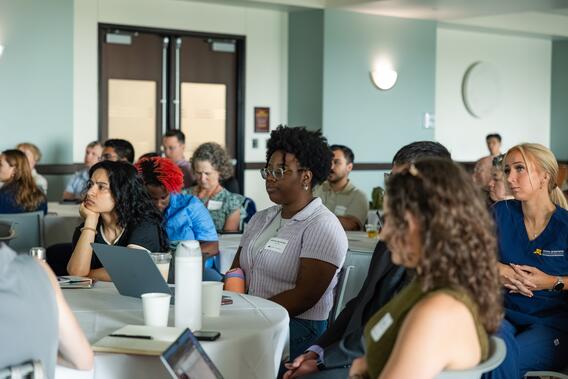
Following a break for lunch and networking, students in the DDS Student Summer Research Program shared an update on their research projects. These projects are completed over a 7-10 week period under the guidance of a faculty member before the first or second year of the DDS program.
Oral biology students then shared their thesis research in a 3-Minute Thesis format, sharing the main idea of their studies in three minutes with one static slide. This presentation served as a practice run for students who will engage in the school-wide competition in the fall.
Lanre Ajeigbe, BDS, PhD candidate, won the practice contest for her research on MCT-1 and oral cancer, or “seeing protein expression in a new light.” Barbara Azevedo Machado, BDS, PhD candidate, won the audience choice prize for her exploration of DNA mutations and how to “rewrite the mistakes” that cause oral cancer.
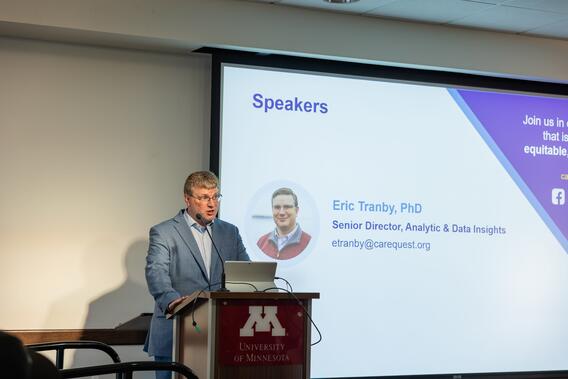
Finally, Eric Tranby, PhD, senior director of analytics and data insights for the CareQuest Institute for Oral Health, shared the importance of translational research and how research impacts and drives change in oral health care.
“Research in isolation does not generate change. Why do we do research?,” he posed. “The work itself brings rewards, but we typically do research because we want to see changes. We want our patients and communities to be healthier.”
Research can feel isolated and separate from clinical practice, he noted. “Today, I want to share what you can do as clinicians and researchers to understand how the oral health system impacts care, and what you can do to improve and enhance that system.”