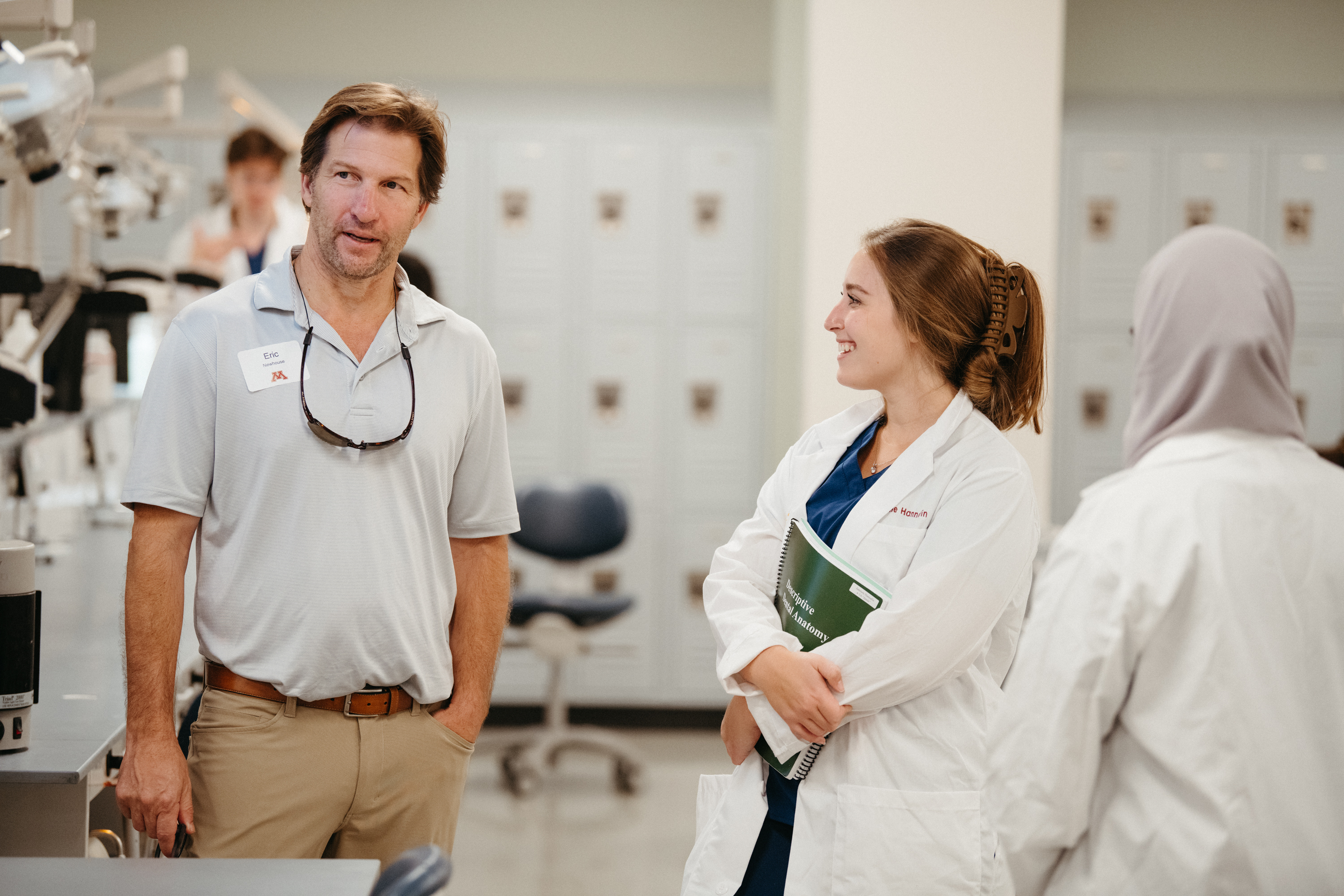
Many dentists have been a mentor for dental students at some point in their professional dental careers—and many have been a mentee. Serving as a mentor for the Dental Career Track Program is an opportunity to make a connection with dental students and give back to the dental profession. A mentor guides mentees through career and personal development. Mentors also help shape the next generation of dental professionals by being a resource for the students (mentees) and by sharing their knowledge, expertise and real-world insights.
Mentorships enrich both the mentor and the mentee.
- Mentors help develop mentees by building professional and personal abilities and skills.
- Students can make valuable connections, discover new opportunities and seek expert knowledge and skills for their careers.
Frequently Asked Questions
Who can be a mentor?
Any licensed dentist with a minimum of three years of practice experience is eligible to apply to be a mentor. Mentors can make a positive contribution to students as long as they have a desire to mentor. Additionally, we welcome mentors from various specialties and backgrounds, as this enriches the students’ learning experience.
What are the qualifications to become a mentor?
Mentors should:
- hold a valid dental license.
- have at least 3 years of experience practicing dentistry.
- be passionate about teaching and guiding the next generation of dental professionals.
- have strong communication and interpersonal skills.
- be willing to dedicate time to mentoring students.
What are the mentor responsibilities?
Some of the responsibilities of mentors are to:
- provide students the opportunity to explore a career pathway within dentistry.
- provide support and guidance, as well as positive and constructive feedback to the mentee(s).
- help the mentee(s) identify and define professional development goals that are specific, measurable, and attainable.
- be transparent and willing to share your experiences and knowledge with your mentee(s) as needed.
- maintain confidentiality of information with your mentee(s).
- serve as a positive role model.
What is the time commitment for mentoring?
The time commitment varies based on the mentor-mentee relationship. On average, mentors are expected to meet with their mentee(s) at least two to three times per year to establish a working relationship and to support mentee(s) in professional development goals. Mentors must be able to commit for one year (summer, fall & spring semesters).
What are the benefits of being a mentor?
- Personal fulfillment: Play a direct role in shaping the careers of future dental professionals.
- Personal growth: Allows you to gain new perspectives.
- Professional development: Develop your own leadership, teaching, and coaching skills.
- Networking: Connect with other dental professionals and educators.
- Recognition: Receive formal recognition for your contribution to the dental community.
How are mentors matched with students?
Mentors are matched based on the career track selected. We aim to align mentors with students in a way that supports both the mentor’s strengths and the student’s learning goals.
Why might I be asked to mentor more than one student?
Traditionally, we think of individual mentoring, where one mentor is matched with one mentee. Although some tracks may have enough mentors to assign each student an individual mentor, some tracks, such as Clinical Practice & Leadership, may employ a group-mentoring model. Group mentoring is a powerful tool given the number of students in our dental student program. Group mentoring enables one mentor to guide multiple mentees simultaneously. The mentor still provides guidance, feedback and support but the collaboration of students allows individuals to learn from each other’s experiences, perspectives and insights.
How will I be supported as a mentor?
We provide training and resources to help you succeed as a mentor. This will include:
- a mentorship orientation/training session.
- periodic check-ins from program coordinators.
- access to teaching materials and resources.
- opportunities to connect with other mentors for advice and support.
Do I need any formal teaching experience to become a mentor?
No formal teaching experience is required. However, a desire to mentor and an ability to communicate clearly are essential.
How do I become a mentor?
To become a mentor, fill out the Dental Career Tracks Mentor Application. We will then reach out to you with information regarding next steps.